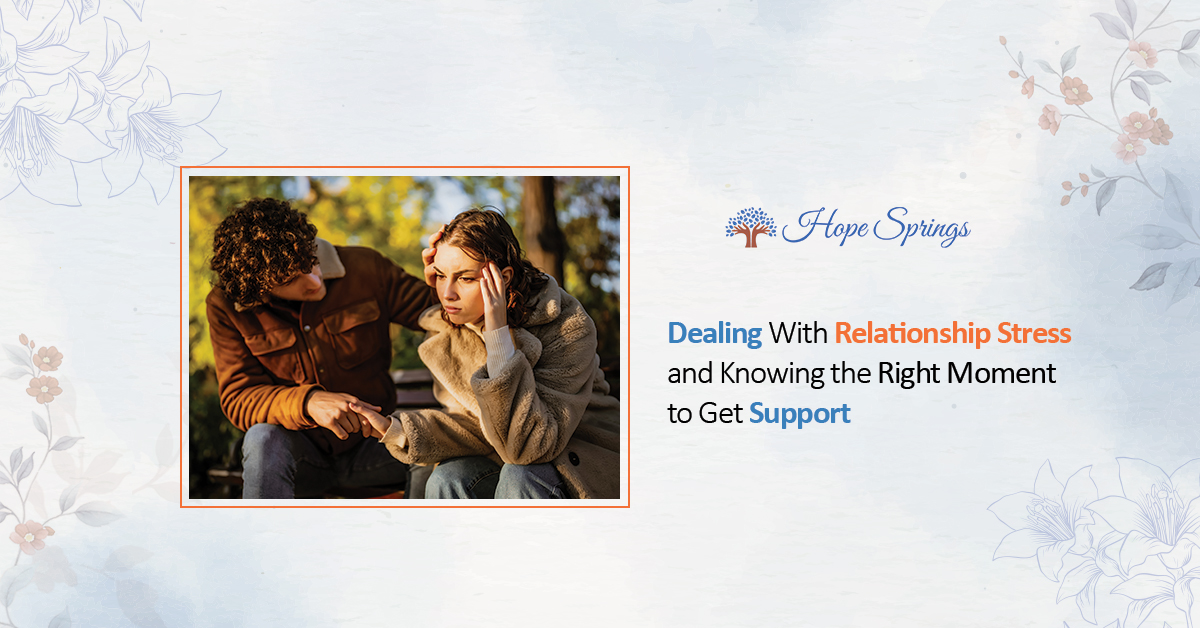
You and your partner are sitting at a dinner table. It’s supposed to be a romantic. Only the two of you are sitting there in another heavy silence, the kind that is not peaceful at all.
This is a stranger to you, a stranger that you have shared life with. This is supposed to be one that you feel most comfortable with. When did you two lose that connection?
If this is you, take a breath.
When Stress Starts Showing Up
The thing with relationship stress is that it can hardly manifest itself like a fire alarm. It is rather like a drip that you do not realize is leaking until there is a puddle on the floor.
Perhaps you have noticed some of this as of late:
- The atmosphere is filled with tension and an argument is seething under the surface
- You find yourself getting irritated by your partner in a way that is unwarranted
- You are in the same house but the two of you feel like total strangers to one another
- You used to have date nights, but now they don’t happen
- You catch yourself thinking about your relationship in a negative light rather than reliving fond memories
- You become incredibly anxious, and you would feel more comfortable communicating with them through texting rather than having an actual conversation
All of this is simply a sign that your relationship isn’t working as it should.
Why We Put Off Getting Help
People feel weird about admitting they are seeing a therapist with their partner, as if it is an admission of failure at something everyone else seems to be succeeding at.
Everyone else might be struggling too; they’re simply not talking about it. That’s the only difference.
We tell ourselves we can handle it. That it’ll pass. That involving another person somehow makes it more real. So we wait.
And the distance grows, and resentment builds, until what could have been an easier conversation six months ago is now a difficult discussion laden with all sorts of baggage.
Most people wait years before reaching out. Years of the same fights, the same hurt feelings, the same patterns on loop. And by then, you’re both exhausted.
Figuring Out When It’s Time
So when’s the right time? Honestly, it’s probably earlier than you think.
Here are some moments when reaching out makes sense:
- You’re stuck in the same loop, same fight, different day, no solution
- There’s been a betrayal and you don’t know how to move past it
- Big life stuff hit (job change, moving, becoming parents) and suddenly you’re strangers
- You love each other but don’t actually like spending time together anymore
- Someone cheated or seriously broke trust
- You’re thinking about leaving but part of you wants to try first
- Nothing’s technically wrong but the spark is just… gone
And here’s something people don’t talk about enough: you can go to therapy when things are actually okay.
Think of it like regular maintenance.
What Therapy Actually Is
When you think about therapy, especially couples therapy, many people feel an increased sense of fear and intimidation.
There is often an image of a therapist trying to take one side. But that is not even close to what actually happens.
The experience is more like having a guide. A facilitator.
A professional to help analyze the core issues and come up with a way to address challenges. To help facilitate. To help translate. To help understand. To sort out what is being expressed.
Good therapy gives you tools.
- New ways to engage in a conflict
- New methods to re-establish connection after separation, drift, and distance
- Actual skills to comprehend what your partner is trying to say, instead of what you think they are trying to say to you
Making the Move
It is in therapy that we can seek assistance and help with the many challenges we face in life and in relationships; therapy not only helps with the present and the case at hand but relieves the burdens of the past as well.
The conversation should not focus on blame but on the hope of improvement. “I feel really distant and miss talking to you,” is much better received than, “I feel ignored, and you are not listening to me at all.”
If your partner pushes back on any part of that, give it time. Change is scary.
And if they really aren’t interested? You can still go alone and work on your side of things.
We’re Here When You’re Ready
At Hope Springs Psychotherapy, we understand.
Relationships can be so difficult and therefore, when cultural differences, family expectations or any big changes in life are thrown into the mix, then all is more complicated.
Whether things feel urgent or you just want to strengthen what you’ve got, our team in NYC knows how to create space for real and honest conversations.
Let’s talk and discuss what support looks like for you two!
FAQs
Do we both have to want therapy for it to work?
Understanding is essential on both sides, though it is not a requirement. Change happens for both people.
How do we even know if our problems are “bad enough” for therapy?
If you are wondering this, it probably means you do. You should not have to wait until things are worse. Feeling disconnected is enough.
What happens in the first session?
What usually happens in every session is understanding where you at, and where you want to go.