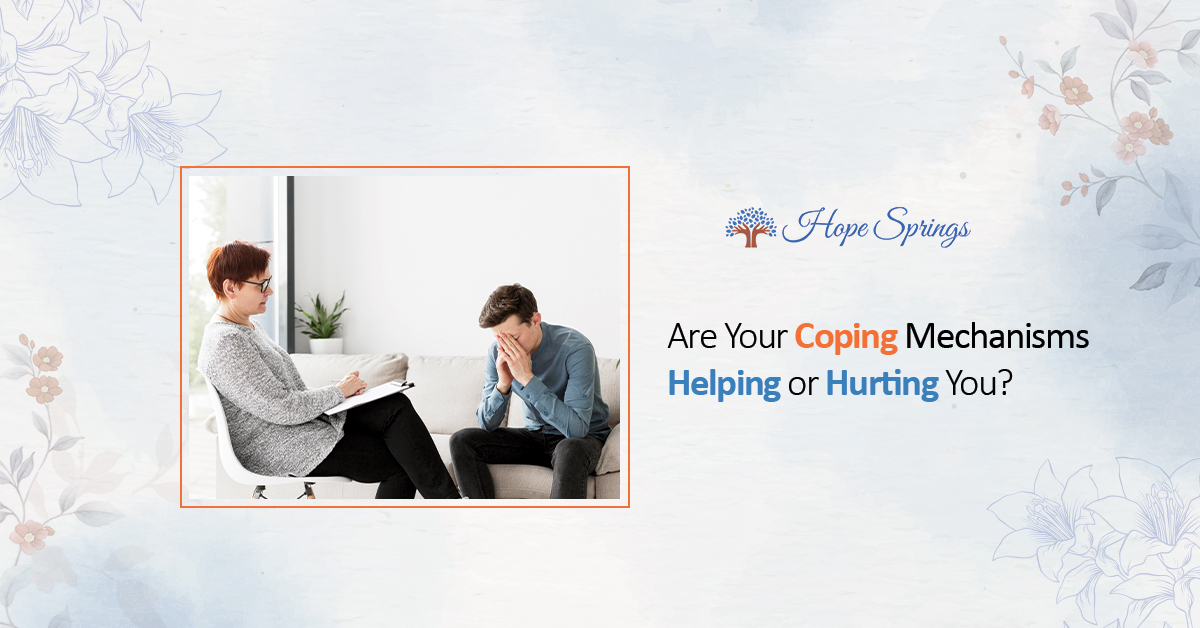
All of us have to deal with stress. You may check your phone when you are feeling stressed or have a snack when you are feeling frustrated.
You can get absorbed in the work process so that you do not even consider whatever it is that distracts you.
These are some coping strategies, and they are what it means to be human. The thing is, though, that not every coping mechanism is beneficial to us.
What Are Coping Mechanisms?
Coping mechanisms refer to any strategy a person uses to manage difficult emotions, stressful situations, or challenging life circumstances; they are what you have in your emotional toolbox.
Some of them build your resilience and address your emotions in a healthy way. Some of them may be helping to dull the pain in the short term. Though they add to it in the long run.
Your brain requires something to lift your mood again when you are feeling overwhelmed.
But it does not always choose the best thing. It merely chooses what seems to offer the greatest short-term satisfaction.
The Distinction Between Healthy and Unhealthy Coping
Healthy coping mechanisms can:
- Make you accept and work out emotions as they are, instead of ignoring or repressing them
- Promote your overall health in the long run
- Enhance personal relationships
- Usually leave you feeling better
- Create strength in dealing with future challenges
Unhealthy coping mechanisms often:
- Provide temporary relief, but end up creating more problems as they help you avoid dealing with the real issue at the heart of the matter
- Harm your physical or mental health and damage your relationships, leaving you feeling worse in the long run
The tricky part is that sometimes, unhealthy coping mechanisms feel good in the moment and that is why they’re so easy to fall into.
Common Coping Mechanisms to Watch For
Some coping strategies seem harmless on the surface, but might be holding you back. Here are a few to consider:
- Emotional eating. Ignoring your feelings and just finding comfort in food instead
- Heavy social media consumption. Scrolling for ages, avoiding those uncomfortable thoughts
- Overworking. Drowning yourself in to-dos to avoid personal issues
- Substance use. Alcohol or another substance to try and block those unbearable feelings
- Withdrawal. Isolating yourself from friends and family members when things get bad
- People-pleasing. Always attempting to put other needs before your own, so nobody is mad at you and nobody rejects you
Research shows that people struggling with depression tend to rely more on behavioral disengagement and problem denial while having trouble interpreting stressful events in a positive manner.
None of these are bad in moderation. The question is: are they helping you move forward, or are they keeping you stuck?
Related: Signs You’re Experiencing Depression and Need Support
Signs Your Coping Mechanism Might Be Hurting You
At times, it’s hard to tell when a coping strategy has crossed a line. Here are some signs to watch for:
- You feel dependent on the behavior
- It’s interfering with your daily life or responsibilities
- You’re using it more frequently or intensely than before
- You feel guilty or ashamed afterward
- It’s affecting your physical health
- Your relationships are suffering because of it
Building Healthier Coping Strategies
The best part is that you can be taught to deal with it in a healthier manner. It requires practice; however, it is possible.
You may want to start by talking about it:
- Talking it out. Being open with a person you trust
- Moving your body. Workout produces natural mood enhancers
- Mindfulness. Spending some time just noticing what you are thinking and not judging
- Creative expression. Writing, drawing, or making music to process emotions
- Setting boundaries. Learning to say no when you need to protect your energy
Make a Change
At Hope Springs Psychotherapy, we have culturally aware therapists who know that stress is a unique experience for all individuals.
We provide a non-judgmental environment in which you discover ways to cope with stress, its causes, and learn new, more effective ones that can be effective in your life.
Individual therapy can help you look into these patterns and change them.
You have a right to feel good both in the short run and the long run. Get a consultation now! Start working on those coping skills in a way that will be effective.
References:
- National Institute of Mental Health. Coping with Stress.
- American Psychological Association. Building Your Resilience.
FAQs
Can healthy coping mechanisms be actually transformed into unhealthy coping mechanisms?
Even the good coping mechanisms might sometimes become problematic. This is when they’re overdone instead of working on emotions.
What is the duration to make changes in coping habits?
It is different, but through practice and encouragement, the majority of individuals feel positive changes within a few weeks to months.
Is it natural to employ more than one coping mechanism?
Yes. The vast majority of people do employ a mix of strategies. This can actually be based on the circumstances and their emotional condition.